

Institute for Human and Artificial Work
The Chief Workforce Officer

Who is responsible for the workforce you actually have?

Organisations now give real work to people and AI agents together, and no one is accountable for the whole.

One executive. The whole workforce.

A Chief Workforce Officer is accountable for the organisation's productive capacity, human and artificial, as a single managed whole.

Today the decision about which work AI agents do is made by whoever controls a software budget, and discovered by everyone else afterwards.

HR learns of it as a hiring freeze. Finance sees the saving and not the cost of checking the agent's work. IT is accountable for the system running, not for what it does. Nobody owns the consequence, and when an agent fails at scale the first response is a search for who was supposed to be watching.

The role closes that gap. It decides, task by task, what share of the work is done by people, by agents, and by the two together. It sets the rules for allocating work between them. It measures the performance of the whole capacity, including the human hours spent verifying agent output, which no dashboard reports. And it governs the agents through a lifecycle that keeps the rigour of human resource management and none of its anthropomorphism.

For every agent, a named human with the expertise to check its work and the authority to stop it signs for its output, or the agent is not deployed.
The CWO owns

Composition.

For each family of tasks, the mix of people and agents, and how fast it changes.

The CWO owns

Allocation.

Who or what does a task, decided by the cost of checking the output, not only of producing it.

The CWO owns

Performance.

Output, quality, incidents and verification hours, across people and agents together.

The CWO owns

Governance.

The agent lifecycle, the named accountable human, and the redesign of human roles around agents.

The CWO never owns

The technology.

Models, vendors, data and security stay with the CIO, who becomes the CWO’s most demanding peer.

The CWO never owns

Ethics and legal findings.

The CWO acts on them and does not produce them.

The CWO never owns

Daily operations.

Line leaders run the work inside the boundaries the CWO sets.

The CWO never owns

A seat below the CIO or CFO.

The role reports to the chief executive, so that it can say no.

The lifecycle

Selected, not hired.

Deployed, not onboarded. Evaluated, not reviewed. Updated, not developed. Retired, not terminated.
The CWO owns

  • Composition. The human–agent mix for each family of tasks, and how fast it changes.
  • Allocation. The rule for who or what does a task: the cost of checking the output, not only of producing it.
  • Performance. Output, quality, incidents and verification hours, across people and agents together.
  • Governance. The agent lifecycle, the named accountable human, and the redesign of human roles around agents.

The CWO never owns

  • The technology. Models, vendors, data and security stay with the CIO, who becomes the CWO's most demanding peer.
  • Ethics and legal findings. The CWO acts on them and does not produce them.
  • Daily operations. Line leaders run the work inside the boundaries the CWO sets.
  • A seat below the CIO or CFO. The role reports to the chief executive, so that it can say no.
Selectednot hiredDeployednot onboardedEvaluatednot reviewedUpdatednot developedRetirednot terminated

In most companies this will be today's chief human resources officer with a larger mandate. The title can wait. The mandate cannot.

Twenty-three essays. One question.

Should the role exist, and what must be thought through before an organisation creates it?

Essay 1 · 6 minSomeone should be responsible for the workforce you actually haveModerna merged HR and IT. Lattice put agents on the org chart and retreated in three days. Workday proposed a mindset. The case for a Chief Workforce Officer with a precise charter.ReadEssay 2 · 5 minWho bought the agent?The most consequential workforce decision in most companies is being made by procurement, and nobody has noticed.ReadEssay 3 · 6 minThe two-hours problemAn agent that saves ten hours and consumes eight hours of checking has earned two. Almost no dashboard can see the eight.ReadEssay 4 · 6 minLattice was right about the problemIn July 2024 an HR company tried to put AI agents on the org chart. It was wrong in a way worth understanding precisely.ReadEssay 5 · 6 minModerna: the right instinct, the wrong structureMerging HR and IT under one leader solves a coordination problem by removing the one voice that should be able to say no.ReadEssay 6 · 5 minA mindset cannot be paged at six in the morningWorkday proposes a Chief Work Officer that is a shared mindset rather than a job. Accountability is the one thing that cannot be shared.ReadEssay 7 · 6 minThe entry layer goes firstAutomation lands on the routine work that junior people do while they learn. Five years later the organisation discovers who is missing.ReadEssay 8 · 6 minSelected, not hired: the agent lifecycle in five verbsKeep the rigour of human resource management. Drop the anthropomorphism. Five stages, each with the stage it must not be confused with.ReadEssay 9 · 6 minWhat the Chief Workforce Officer owns, and what it must never ownA role is defined as much by what it refuses as by what it takes. Four responsibilities, three exclusions, one reporting line.ReadEssay 10 · 5 minThe CIO is not the enemyThe Chief Workforce Officer and the Chief Information Officer must be able to say no to each other. That is a design, not a conflict.ReadEssay 11 · 5 minHeadcount is the wrong numberEvery workforce report an executive sees counts people. None counts productive capacity. That blindness is now expensive.ReadEssay 12 · 6 minAgents are not employees, and the people will knowHannah Arendt separated labor, work and action. The agent absorbs the first two. What that leaves for human beings is the question organisations are about to face.ReadEssay 13 · 6 minWhat Coase and Simon would say about an agentThe theory of the firm was built on human employees who could be told what to do within limits. The agent breaks the limits in both directions.ReadEssay 14 · 5 minThe missing junior loopThe experts who verify the agents were once juniors who did the work by hand. Remove the hand-work and the expertise stops reproducing.ReadEssay 15 · 6 minWhy the evidence is small and the fear is largeExposure is not adoption. Adoption is not substitution. Reading the research honestly is the first duty of anyone who would govern a workforce.ReadEssay 16 · 5 minThe accountability testFour questions a board can ask about any AI agent in the organisation. If the answer to the first is a meeting, the rest do not matter.ReadEssay 17 · 5 minA Chief Workforce Officer in a two-hundred-person companyThe title is for large organisations. The job exists at any size where an agent does work that used to be someone's.ReadEssay 18 · 5 minWhat the law will and will not do for youRegulation is arriving, and it will assign duties to organisations. It will not tell you who inside the organisation holds them.ReadEssay 19 · 5 minRead the evidence like a workforce leader, not a buyerA retracted paper, a vendor survey and a dozen field experiments: the skill the role most needs is knowing which numbers to trust.ReadEssay 20 · 5 minThe first ninety daysA new Chief Workforce Officer should not announce a strategy. They should find out what the organisation already employs.ReadEssay 21 · 6 minWhat happens to HRThe profession that was built around human employees is not being replaced by this change. It is being asked a question it has never had the authority to answer.ReadEssay 22 · 7 minTen objections to the Chief Workforce Officer, answeredThe strongest arguments against the role, stated fairly, and where each one lands.ReadEssay 23 · 7 minChief Agent Officer, agent manager, or Chief Workforce Officer?In 2026 the question this series asks acquired two rival answers in print. Both are serious. Both leave out the half of the workforce that is human.Read

About the founder.

The Institute is a small, independent, non-profit research initiative founded in Madrid in 2026. Its first subject is the question on this page.

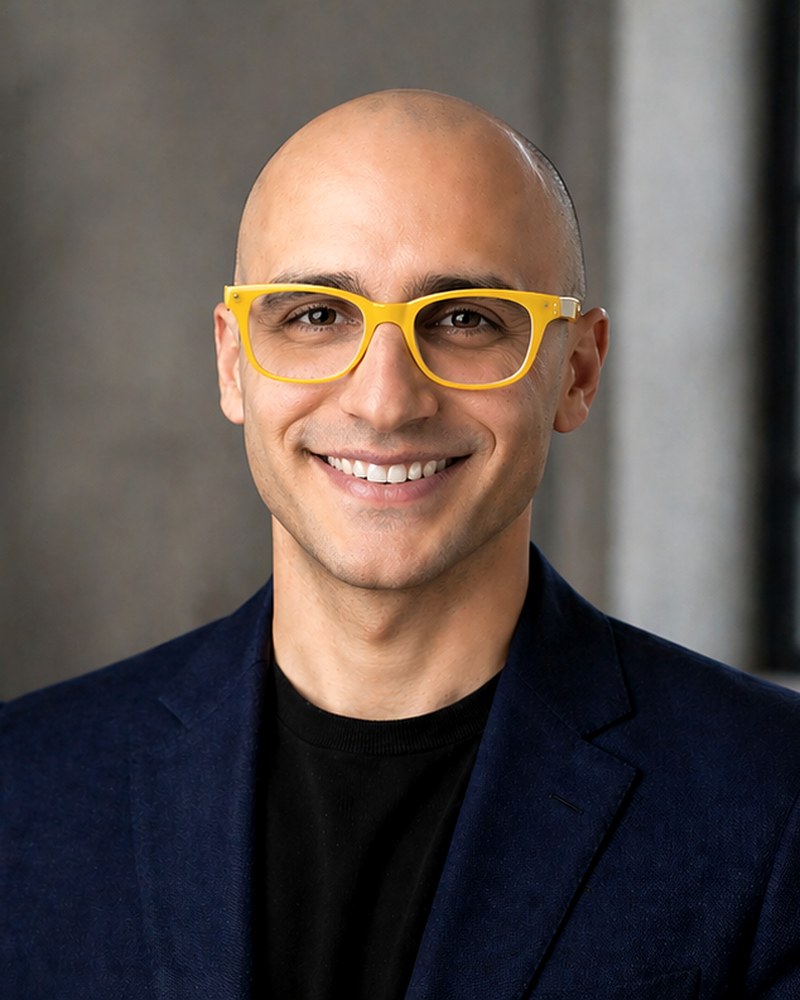
Iman Abrishamchi
Iman Abrishamchi · Founder

Fifteen years inside organisations, on the human side of how they work.

Executive and organisational coach, People & Culture advisor, and organisational behaviour practitioner. He advises senior leaders and HR directors in consumer goods, electronics, life sciences, fragrance, industry and technology, and has worked in Spain, Iran, Kuwait, Qatar, China, Kenya, Canada and Poland, in Persian, English and Spanish.

15+years of practice
8,500+coaching hours
8countries worked in

Join the community.

A founding circle for the people who hold this mandate, or who are about to: HR and People leaders, CIOs, operations heads, researchers. Small by design, no fee, by application.

What members do

  • Compare notes. A closed monthly conversation on how agents are actually governed inside members' organisations.
  • Read first. Early drafts of essays and research notes, and the chance to challenge them before publication.
  • Build the standard. Help write the first operating model of the role: the register, the signature, the lifecycle, the ninety days.

Who it is for

  • Practitioners who are, or will be, responsible for people and agents together, under any title.
  • Researchers in organisational behaviour, labour economics or AI governance who want field access and criticism in return.
  • Not for vendors of agent platforms, or anyone selling to the members. Observers from vendors may be invited to specific sessions.
Your situation
Three or four sentences are enough. An account of how agents are run in your organisation is the most useful thing you can offer.

Write to the Institute.

Objections, accounts from inside organisations, collaboration. Every message is read and answered.

An objection, a question, or what is happening in your organisation.
Or connect on LinkedIn